
By Laila Nahas
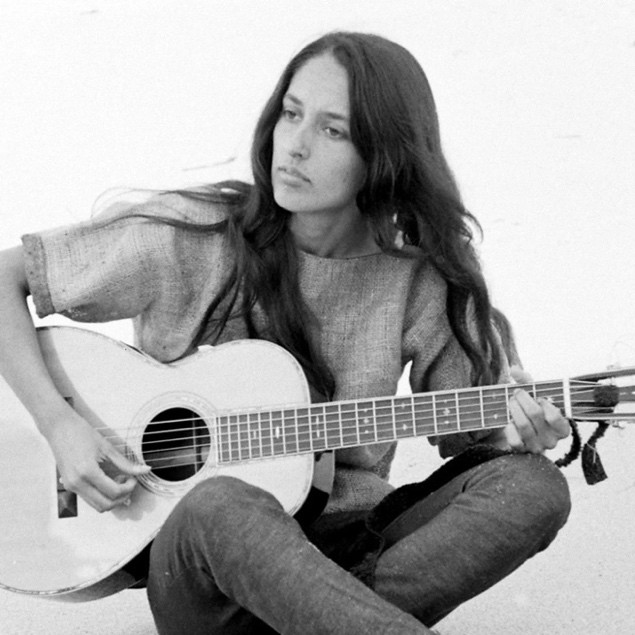
Throughout this paper, the song We Shall Overcome will be analyzed in the rhetorical situation and the history of how the song came to be. This paper will also look into specifically Joan Baez and her performance of the song We Shall Overcome and looking at the efforts she put into using her musical platform to support various social movements throughout the years. We will also look into how Charles Albert Tindley’s song started as a gospel song for churches to sing and then started to slowly turn into a protest song for many groups, specifically the Civil Rights Movement. Joan Baez herself is a very prominent musician in the folk genre, as she was also apart of a large group of artists who were in the folk revival period. Baez was known to support a significant number of social movements, a main one being the civil rights movement. She is an influential artist and continues to be an activist and musician today.
We Shall Overcome has an important back history that will be given. The song itself is used as an anthem for the civil rights movement and holds a very strong meaning. The song We Shall Overcome was originally written by Charles Albert Tindley, a minister, in 1900, says Victor M. Parachin in their article “We Shall Overcome”— The Story Behind the Civil Rights Song”, and was originally called I’ll Overcome Some Day, written as a hymn and became a popular gospel song. The article continues to talk about how the song title was then changed by Zilphia Horton in 1945, who was a civil rights activist and a musician, and changed it to We Shall Overcome Someday (Parachin, 2017).The article then goes into how the song became popular and what the meaning held in that time and now, saying that “In October of 1945, Horton adapted Tindley’s hymn for union workers on strike in Charleston, South Carolina. With them on the picket line, Horton led them in linking arms and singing “We Shall Overcome.” A few years later, in 1950, the song was recorded and increased its visibility and popularity among various groups supporting civil rights” (Parachin, 2017). The song then became a main protest song in August 1963, where artist Joan Baez sang the song at a protest. The article says how “At that time, 300,000 civil rights supporters met at the Lincoln Memorial in Washington, DC. There, a 22 year-old folk singer named Joan Baez led the crowd of 300,000 in singing “We Shall Overcome” (Parachin, 2017). It is also noted that artist Pete Seeger adapted the song and officially called it We Shall Overcome in 1948, and his version is the one that most people know today, according to Kate Stewart (2014), who wrote the article “Tracing the Long Journey of “We Shall Overcome”. This song was so powerful, that other groups outside the Civil Rights Movement were using it as well. The rhetorical situation and its main concepts will be used to analyze the original song and how it relates to many and why it was so popular to sing.
Beginning with its exigence, we must understand what that means first. According to Richard Nordquist, who wrote the article “Exigence in rhetoric”, they say that “exigence is an issue, problem, or situation that causes or prompts someone to write or speak” (Nordquist, 2025). With this definition in mind, we are able to look at the context of the song and why it was written, and then later performed by many. In Tindley’s time, there was a huge amount of discrimination, racism, and violence that was happening towards Black people in America. Charles Albert Tindley wrote his song in a time whereas a minister, he tried to address any issues of racism that people were facing, again referring to Parachin’s article. Tindley also led a group to protest against the movie The Birth of a Nation, the article states how “At the protest, Tindley and his group were viciously attacked by mobs of whites who beat them with clubs, sticks and bottles. Many were injured and required hospitalization. Tindley was one of the injured, but was treated at home” (Parachin, 2017). We can understand that this song was probably made as a way to motivate and strengthen the hopes of discriminated groups to come together and overcome hardships. The first lyrics in the song are
“This world is one great battlefield
With forces all arrayed
If in my heart I do not yield
I’ll overcome some day.”
This is important to note because the message is very direct, the world is referred to as a “battlefield,” showing how the world can be a place where people from different races and backgrounds might struggle through. There is a glimmer of hope coming through, where the lyrics say if the heart doesn’t yield, then one day the person will overcome whatever it may be that they are going through. This is a powerful first part of the song, and we must remember that this song was a gospel song first, then changed by some artists later. Tindley’s version mentions Jesus and saying,
“Though many a time no signs appear,
Of answer when I pray;
My Jesus says I need not fear,
He’ll make it plain some day.
I’ll be like Him some day,
I’ll be like Him some day;
My Jesus says I need not fear,
He’ll make it plain some day”
This part of the song shows how Tindley also relied on faith, and encouraged the people in his congregation to do the same. Even though some parts of the song have changed, it can still be noted that the song is to help people be faithful in times of violence and despair.
The audience of this song might have originally been for people at church, since the origin of the song is that it was a gospel song. We do see this change as the song begins to increase in popularity among protesters. Groups like the civil rights movement, union workers, and even movements outside the country, relate to this song, and gained immense popularity in countries like Ireland, Malaysia, and other countries in Europe (Parachin, 2017). According to another article from Richard Nordquist called “What is a Rhetorical Situation?”, the audience are “the recipient of the communication” and also says how “The same factors that influence an author also influence an audience. Whether that audience is a single person or a stadium crowd, the audience’s personal experiences affect how they receive communication, especially regarding the assumptions they may make about the author and the context in which they receive the communication” (Nordquist, 2024). With looking specifically at the Civil Rights Movement, we can notice why this song became the anthem that it is for the movement. It was powerful and inspired people to continue forward through hardships and racism.
When it comes to constraints, there is mainly the issue of copyright, since the song was changed a couple times throughout history. According to a transcript article from NPR, Rick Karr talks to Isaias Gamboa, who is a musician and a filmmaker. Karr mentions how “A couple of music publishing companies claimed that they owned the copyright on a version of “We Shall Overcome” from 1963. It’s credited to a group of writers, including the late Pete Seeger” (Karr, 2018). Karr also talked about how Gamboa “filed suit to strip the song of copyright,” also saying how “He based his claim on years of research for a documentary film about the song’s history. The case was set to go to trial next month until Gamboa laid out his evidence in a deposition” (Karr, 2018). The conversation continues by Karr saying that Gamboa found multiple versions of the song that were older. The judge his case had stripped the copyright from the songs first verse, but after a Gamboa case, the song was put back in public domain, and many people could use it again (Karr, 2018).
The resources used for this song would have to be that pathos is the main form that is used for the making of this song and the use it has in different social movements. According to Tyler Biscontini, who wrote the article “Pathos”, they mention that pathos is a “critical rhetorical strategy”’ that “appeals to the emotions of an audience rather than relying on logical reasoning” (Biscontini, 2024). Biscontini also says that “This technique is designed to evoke specific emotional reactions through the careful selection of words with strong connotations, aiming to connect with the audience on a deeper emotional level” (Biscontini, 2024). The use of pathos is shown throughout all of the lyrics of the song. Taking a look at the original song again, we see that pathos effect play in where it says,
“I fail so often when I try
My Savior to obey;
It pains my heart and then I cry,
Lord, make me strong some day.
Lord, make me strong some day,
Lord, make me strong some day;
It pains my heart and then I cry,
Lord, make me strong some day.”
When looking at this part of the song, we can understand why Tindley would make a more emotional appealing song. The lyrics are essentially saying that when this person tries to obey his Savior, they feel like they have failed, but they want to do better, and cry with emotion. This version of the song in general can provide feelings of comfort, hope, and motivation for the future.
The movement that has the most use with this song is the Civil Rights movement. This is again important to remember because the song’s original intent is to recognize the struggles of Black Americans throughout the history of America and uplift them. We see an exceptional performance of this song through the artist Joan Baez. Although Joan is a Mexican American artist, she was able to take the song and sing it in a way that was able to be understood and loved by everyone at the March on Washington in 1963.
As a backstory on the performer of this song, Joan Baez was born in Staten Island, New York, according to Lannyl Stephens, who wrote the article “Joan Baez: The Queen of Folk Merges Music and Social Justice.” Stephens continues to go into Baez’s life, talking about how Baez has released many albums in about six languages, uses her musical platform for activism, ad advocated heavily for civil rights (Stephens, 2023). Baez’s father was a mathematician and physicist from Mexico, and their family moved to Palo Alto, California. Joan grew up to love music and has always had a great voice. After graduating high school, she and her family moved to Boston, Massachusetts, where she enrolled in the Theatre Department at Boston University. Later she left school and focused more on her music (Stephens, 2023). Stephens also talks about how Baez became more involved with social issues and how she use her music to advocate for others, saying “As a young woman she declined to play in any white student venues that were segregated, which meant that when she toured the Southern states, she would play only at black colleges. Among the seemingly countless causes she has championed are prison and death penalty reform, LGBTQ+ rights, protesting the war in Vietnam, civil rights in Iran, protesting the war in Iraq, and Occupy Wall Street. She sang at many civil rights marches and rallies in the mid 1960’s. She made free concert appearances on behalf of UNESCO and other civil rights organizations” (Stephens, 2023). Baez clearly believed in equality for others, and took her opportunity to help support others in their causes. It is also mentioned that Baez even founded the Institute for the Study of Non-Violence in Carmel, California (Stephens, 2023). Joan gained a lot of her popularity from singing at the March on Washington that happened in 1963. According to the National Park Services’s article “March on Washington for Jobs and Freedom”, they explain why the march was done, saying “The event focused on employment discrimination, civil rights abuses against African Americans, Latinos, and other disenfranchised groups, and support for the Civil Rights Act that the Kennedy Administration was attempting to pass through Congress” (National Park Service). This march was important to have, as it helped raise and amplify the voices of those people in these groups who were not being heard out.
Initially when Joan performed at the march, there were some constraints, and she was able to overcome them too. According to the article “Joan Baez” from Life Stories, they mention how “she experienced racism and discrimination as a child that may have inspired her life-long commitment to social justice, civil rights and non-violence” (Life Stories). Joan, having overcome her own times of discrimination and racism, sends a message in just singing We Shall Overcome alone, by being of Mexican descent and a woman in music, she was able to take this song and turn it into a song that many people of various races and backgrounds could relate to. An article from Snippet of History mentions how the song was later on connected to her, saying “The early years of Baez’s career saw the Civil Rights Movement in the U.S. become a prominent issue. Her performance of “We Shall Overcome“, the civil rights anthem written by Pete Seeger and Guy Carawan, at the 1963 March on Washington for Jobs and Freedom permanently linked her to the song. Baez again sang “We Shall Overcome” in Sproul Plaza during the mid-1960s Free Speech Movement demonstrations at the University of California, Berkeley in Berkeley, California, and at many other rallies and protests” (Snippet of History).
Joan sang Seeger’s version of the song, with some of the lyrics saying,
“We shall overcome,
We shall overcome,
We shall overcome, some day.
Oh, deep in my heart,
I do believe
We shall overcome, some day.
We’ll walk hand in hand,
We’ll walk hand in hand,
We’ll walk hand in hand, some day.
Oh, deep in my heart,
We shall live in peace,
We shall live in peace,
We shall live in peace, some day.
Oh, deep in my heart,
We shall all be free,
We shall all be free,
We shall all be free, some day.”
In this version of We Shall Overcome, the lyrics are more repetitive, making it hard to forget. The song continues the pattern of using “We Shall” and “We Are” and connecting words like “live, be free, not afraid” and ends with the same lyric of “We shall overcome, someday.” In this version, we see how there is not much of the spiritual aspect of the lyrics, as the original song intended to have. Even though there have been some changes to the lyric, and possible the meaning being more generalized, everyone singing it can relate to the song being about conquering through the struggles that many social groups would face, like discrimination, xenophobia, and racism.
Throughout the history of the song We Shall Overcome, we see what its original writer wrote and what he wanted the song to be about, how the song was slightly changed later, and sung by artists like Joan Baez who helped give the Civil Rights movement the anthem that they would use later for their movement. We learn how Reverend Charles Albert Tindley wrote the original song and how it motivated the people in his church and outside of it to look into their faith and to be strong in it during troubling times. We also learn in Pete Seeger’s version of the song, it is more generalized for anyone who is listening to it to know that they can overcome big struggles in their life as a community. Joan Baez plays an important part of the songs increase in popularity, having sung the song at the March on Washington protest in 1963 and another time in another protest, and continues advocating for the Civil Rights movement. This song from then on becomes an anthem for the Civil Rights movement and to other movements in the country, even throughout the world. This song is packed and filled with emotional appeal, harboring feelings of hope and comfort that one may feel throughout this song. It is crucial that one learns the history of songs like this one, as it helps us understand why it is so important to different social groups and its use throughout history.
References
Nordquist, R. What is a Rhetorical Situation? 2024. ThoughtCo.
https://www.thoughtco.com/rhetorical-situation-1692061
Nordquist, R. Exigence In Rhetoric. 2025. ThoughtCo.
https://www.thoughtco.com/exigence-rhetoric-term-1690688
Karr, R. ‘We Shall Overcome’ Ruled Public Domain In Copyright Settlement. 2018. NPR, WFYI.
Biscontini, T. Pathos. 2024. EBSCO.
https://www.ebsco.com/research-starters/social-sciences-and-humanities/pathos
Stewart, K. Tracing the Long Journey of “We Shall Overcome.” 2014. Library of Congress Blogs
https://blogs.loc.gov/folklife/2014/02/tracing-the-long-journey-of-we-shall-overcome
Parachin, Victor M. “We Shall Overcome”—The Story Behind the Civil Rights Song. 2017. Christians for Social Action.
Stephens, L. Joan Baez: The Queen of Folk Merges Music and Social Justice. 2023. Village Preservation.
JOAN BAEZ SINGING WE SHALL OVERCOME IN WASHINGTON DC – MARCH 28TH 1963. Snippet of History.
Joan Baez. Life Stories.
https://www.lifestories.org/interviewees/joan-baez
March on Washington for Jobs and Freedom. National Park Service.
Tindley, Charles A. I’ll Overcome Some Day. 1900. Hymntime.
http://www.hymntime.com/tch/htm/i/l/l/o/illoverc.htm
Seeger, P. et al. We Shall Overcome. Streeetdirectory.
https://www.streetdirectory.com/lyricadvisor/song/peuucw/we_shall_overcome